

# EN|Breast Cancer Is Not One Disease: The Big Picture and Its “Five Faces” in an Era of 1-in-8
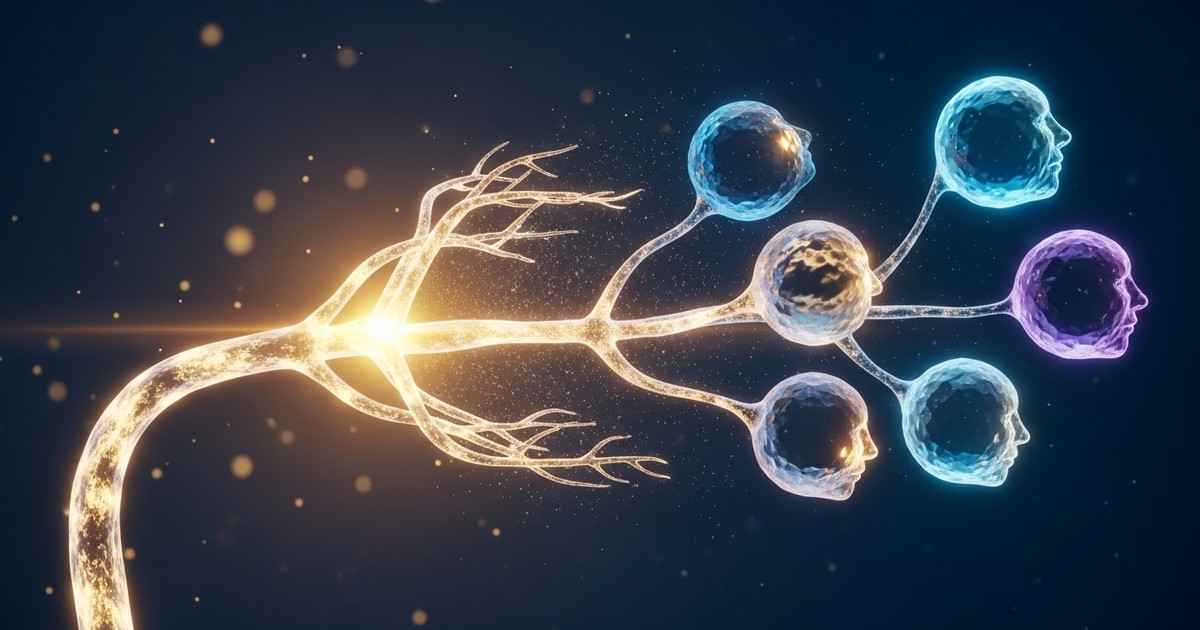
Across high-income countries, roughly 1 in 8 women will be diagnosed with breast cancer in her lifetime. It is the most common cancer in women, with millions of new cases every year. And yet, for something so familiar, the word “breast cancer” does not point to a single thing. Two people can both be told they have “breast cancer” and face entirely different diseases—different personalities, different trajectories, different drugs that work. Breast cancer is, in truth, a collection of conditions wearing five different faces.
“1 in 8” is not a statistic from some distant world. Picture your colleagues, your old friends, your family and relatives. Within any such circle, it would be no surprise for you or someone you love to be the one—that is how close this disease sits. Which is exactly why it is worth starting not with vague dread, but with knowing it correctly.
This series sets out to map that whole picture—starting in everyday language and ending at the global frontier of treatment, with no gaps in between. This first installment is the entrance to a map we will walk over the next two and a half weeks. No jargon yet. Let’s simply grasp what breast cancer is, in broad strokes.
Breast Cancer by the Numbers
Breast cancer is now the most commonly diagnosed cancer in the world. In 2020 it overtook lung cancer for the top spot, with around 2.3 million new diagnoses each year. The number has climbed over recent decades in many regions.
Why the rise? Part of it reflects wider screening—cancers that once went undetected are now being found. Part of it reflects shifts in how we live: later childbearing, fewer pregnancies and less breastfeeding, and changing diets, all of which tend to lengthen the window of exposure to female hormones. In other words, some of the “increase” is the flip side of societies growing more affluent and medicine growing more thorough. *How* each of these risk factors actually works we’ll untangle one by one in Vol.2.
A word here about reading numbers carefully. Breast cancer becomes more likely with age, rising especially from the late forties onward. At the same time, some people are diagnosed young, and—rarely—men develop breast cancer too (it is not a women-only disease). “1 in 8” is a lifetime figure, a cumulative estimate across a whole life; it does not mean that this is your chance of being diagnosed in any single year. Reading numbers correctly is itself a small skill for not being swept away by fear.
But “rising” does not mean “more frightening.” Breast cancer is, in fact, a leading example of a cancer with excellent outcomes when caught early. When it is found while still confined to the breast, the share of people alive five years later (the five-year survival rate) reaches the high 90s percent—meaning more than 95 of every 100 people diagnosed are still well five years on. Advances in imaging and drugs have kept improving that figure worldwide.
So the honest reading of where breast cancer stands today is a two-sided one: “very common, yet one of the most navigable cancers we have.” Holding both the frightening number and the encouraging one at the same time is the starting point of this series—and the foundation for calm judgment.
Where Does Breast Cancer Actually Begin?
Picture the inside of the breast, simply. It contains small sac-like structures that make milk, called lobules, and channels that carry that milk toward the nipple, called ducts—branching like a tree, cushioned by fat and connective tissue. Think of a trunk dividing into branches, with tiny fruit (the lobules) hanging at their tips, and the picture comes into focus.
Most breast cancers begin in the cells lining these ducts (some begin in the lobules). They start as a tiny change in a handful of cells, multiply over a long stretch of time, and may eventually spread into the surrounding tissue. What matters is that this change rarely happens “all at once”—more often it advances quietly over many years. That slow progression is precisely what makes screening, which looks before symptoms appear, so meaningful.
To go a little further: the earliest change begins before we even call it “cancer”—a cell drifting just slightly out of normal. Some of these stay put where they started (non-invasive, or in situ); others, over time, seep out into the surrounding tissue (invasive). Whether a cancer “stays” or “seeps” is a fork in the road that heavily shapes later diagnosis and treatment choices. The whole point of finding it early through screening is that it raises the odds of catching it on the near side of that fork—before it seeps.
And the difference in *where* a cancer begins and *how* it spreads becomes the foundation for the pathological classifications we’ll meet later. For now, one idea is enough: breast cancer starts in the cells of the ducts and lobules—the “channels and sacs” of the breast. What happens at the level of cells and DNA we’ll gently unpack in Vol.3 and Vol.4.
The “Five Faces” — Why One Name Hides Many Personalities
This is the single most important idea for understanding breast cancer. The disease splits into types (subtypes) depending on which molecular “switches” the cancer cells carry. These “switches” are proteins on or inside the cancer cell; whether each is present or absent shapes the cancer’s personality—how fast it grows, which drugs it responds to. Here are the main faces, sketched plainly.
- ① Hormone-sensitive and slow-tempered: feeds on the female hormone estrogen, so drugs that block hormones work well. Tends to grow slowly, and is the most common group of all.
- ② Hormone-sensitive but fast-growing: adds drugs that curb proliferation on top of hormone therapy. The “slow face” and the “fast face” form a continuum, and telling where one ends and the other begins is key to designing treatment.
- ③ HER2-rich: once a fast-moving, formidable face, transformed dramatically by drugs that target the HER2 protein directly—one of the landmark moments where “hard to treat” was rewritten into “treatable.”
- ④ “Triple-negative,” carrying none of these switches: long considered hard to treat for lack of targets, but immunotherapy and new technologies are gradually opening paths.
- ⑤ Special tissue forms: rarer groups, such as mucinous carcinoma, with distinct behavior.
Why does classification matter this much? The reason is simple: a different face means a different drug works. Give a hormone-blocking drug to a cancer that feeds on hormones and you can expect a response; give the same drug to triple-negative disease, which needs no such fuel, and it does nothing. Reading “which face” first is the opening move toward a treatment that hits its target—much as the same “headache” calls for entirely different remedies depending on its cause.
Even under the same name, which face you face changes the drugs chosen and the outlook. That is why learning “which type is mine” at diagnosis is the starting point for understanding your treatment plan. Letting go of the assumption that “breast cancer is one disease” is the first key to understanding frontline treatment. We’ll examine each type—and the markers used to read them, such as ER, PR, and HER2—in depth from Vol.5 onward.
Why “Caught Early” Works So Powerfully
There is a concrete reason early detection is repeated so often in breast cancer. While the cancer is still confined to the breast, it can often be removed completely by surgery, and the heavy, body-wide treatments that assume metastasis can frequently be avoided. Conversely, when a diagnosis comes only after spread to other organs, the difficulty of treatment rises sharply, and the outlook shifts.
Why is “while still confined” so decisive? Breast cancer begins as a local disease, born inside the breast. But once cancer cells slip into the blood vessels or lymphatics and take up residence in the lungs, liver, or bones (metastasis), removing a single site is no longer enough. That is why finding it before it begins to “move house” carries such weight. We’ll follow this biological reason like a story in Vol.4.
That is why screening before any symptoms appear—and everyday awareness of changes in one’s body—matter so much. Exactly when and how to be screened, how much value self-examination really holds, and the fact that screening itself carries both benefits and harms, are practical questions we’ll take on in full in Vol.6.
How to Walk This Series
“From Everyday to Expert: The Frontier” runs eighteen installments. The first half builds, in gentle language, the topics that concern everyone—risk, the body’s structure, screening, and the personal journey of noticing a lump, being told it might be cancer, and the day of diagnosis. The second half climbs step by step into pathology, diagnosis, and the global treatment frontier: HER2-targeting antibody-drug conjugates, immunotherapy for triple-negative disease, the latest biology of metastasis.
What this series holds to throughout is a single stance: “gentle, but correct.” We translate even technical material into everyday language, but we never compromise on scientific accuracy. We neither stoke fear nor offer baseless reassurance—our aim is to support you correctly, with probabilities, data, and biological reasons.
You can start anywhere, but read in order and an “everyday question” flows naturally into “frontline understanding.” Next, Vol.2 steps into who develops breast cancer, when, and why—the real nature of risk across age, hormones, and lifestyle. It offers a first handhold for the question, “What about me?”
My Thought
To anyone meeting this topic for the first time, one thing matters most: breast cancer information holds “frightening numbers” and “encouraging numbers” side by side, and looking at only one half leads to poor judgment. The fact that it is “the most common cancer” and the fact that it is “one of the most navigable cancers we have” are both true at once. Holding both in hand is where calm action begins.
Going a step further, understanding that the name “breast cancer” hides a collection of five faces is not mere trivia. It is one of the most important turning points oncology has reached in the past thirty years. Cancer was once described by the organ it occupied; today it is described by which molecular switch is flipped on. That very shift in perspective produced the antibodies that target HER2 and the therapies aimed at hormone receptors, and it has driven survival upward. What is striking is how much finer this “reading of the face” has become in just the last few years—HER2, for instance, is moving from a yes-or-no call toward recognizing an in-between face (“HER2-low”) that is now itself a treatment target. The map is still being redrawn. “Reading the face” is the heart of precision oncology—and the entrance to the frontier this series ultimately reaches. From the next installment, let’s draw that map together.
Continue the Series
- Vol.1: Breast Cancer Is Not One Disease (this article — the series’ entry point)
- Next: Vol.2 | Who Develops Breast Cancer, When, and Why: Five Handholds for Reading Risk
Related Reading
If you leave a comment telling us which cancers or conditions you’d like us to cover next, we’ll prioritize them in future features.


Comments