

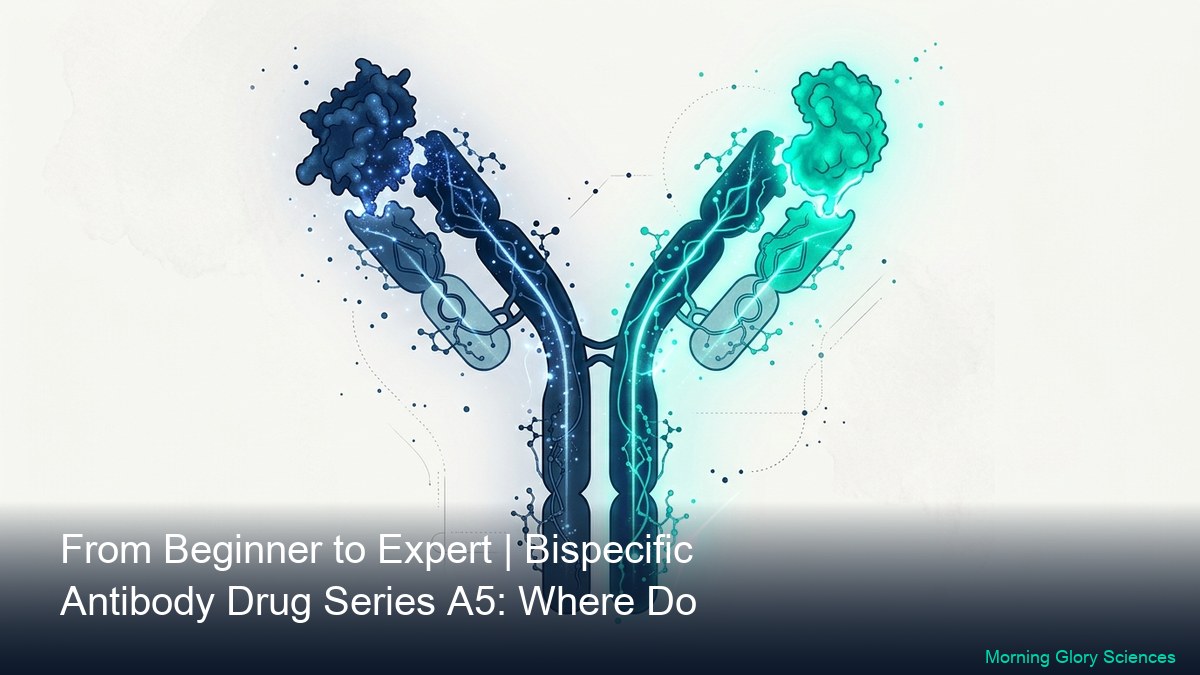
Bispecific antibody drugs have gained a strong presence within cancer therapy over the past several years.
Bispecific antibody drugs have gained a strong presence within cancer therapy over the past several years. However, to truly understand this field, it is not enough to look at bispecific antibody drugs in isolation. What matters is to place them within the broader landscape of cancer treatment and understand where they sit, what they do well, and where their limits lie in comparison with other modalities.
What you will learn
- What kind of treatment are bispecific antibody drugs within cancer therapy?
- 1. Comparison with chemotherapy: differences in selectivity and controllability
- 2. Comparison with molecularly targeted drugs and standard antibody therapeutics: from single-target control to control of relationships
- 3. Comparison with immune checkpoint inhibitors: releasing immunity versus making it happen
- 4. Comparison with ADCs: payload delivery versus immune or signal control
Cancer therapy already includes a wide range of options. Chemotherapy, molecularly targeted drugs, immune checkpoint inhibitors, ADCs, CAR-T, radiopharmaceuticals, and photoimmunotherapy all operate through different principles and offer different strengths. Within this landscape, bispecific antibody drugs stand out because a single molecule can engage two targets or conditions, potentially enabling pharmacology that is difficult to achieve with single-target antibodies. That does not mean they are universal solutions. They have settings in which they are especially useful and others in which they are less suitable, and they may compete with other modalities in some situations while complementing them in others.
In this A5 article, we will first clarify what kind of treatment bispecific antibody drugs represent within cancer therapy as a whole, and then compare them with the major modalities in order to identify their strengths and weaknesses. In particular, we will compare them with chemotherapy, molecularly targeted drugs, immune checkpoint inhibitors, ADCs, CAR-T, and radiopharmaceuticals in order to make their true position clearer. The important point is not to decide which treatment is the best overall, but to understand in which patients, diseases, and therapeutic contexts bispecific antibody drugs are most likely to create value.
What kind of treatment are bispecific antibody drugs within cancer therapy?
At the surface level, bispecific antibody drugs are a form of antibody therapeutic. But in substance, they are more than simply “next-generation antibodies.” As we have seen from A1 through B4, bispecific antibody drugs are design platforms capable of implementing diverse pharmacological functions such as cell bridging, dual signal control, conditional selectivity, and localized activation. In that sense, even though they belong to the broad category of antibody therapeutics, they occupy a rather different position from conventional single-target antibodies.
What is especially important is that bispecific antibody drugs are not limited to “drugs that directly block a target molecule.” They can instead function as drugs that manipulate cell–cell relationships or relationships between multiple pathways. This means that they can intervene at a level of biological complexity that is more advanced than that of standard targeted drugs or ordinary antibodies. At the same time, unlike living cell therapies such as CAR-T, they often do not require the same degree of extreme manufacturing complexity or individualized production. In that sense, they can be thought of as occupying an intermediate zone: still within the world of antibody therapeutics, yet aiming for higher-order pharmacology.
For this reason, bispecific antibody drugs are best viewed not as an isolated category within cancer therapy, but as a therapeutic group located at the intersection of antibody engineering, immunotherapy, and combinatorial modality design. That is where both their appeal and their difficulty come from.
1. Comparison with chemotherapy: differences in selectivity and controllability
Chemotherapy is one of the oldest and still one of the most important pillars of cancer treatment. It works by broadly disrupting cell division, DNA synthesis, or related processes, and remains widely used across many tumor types. Its strengths lie in broad applicability, relatively immediate cytotoxic effect, and compatibility with many combination regimens. At the same time, because it also affects normal proliferating cells, it tends to cause broad, relatively nonselective toxicity such as myelosuppression, gastrointestinal toxicity, and hair loss.
Bispecific antibody drugs, by contrast, offer much greater potential for target selectivity, and in some designs they can be made to act in a tumor-localized or condition-dependent way. In this sense, compared with chemotherapy, there is far more room to design at the molecular level where the activity should occur. In immune-cell-recruiting formats in particular, the mechanism is also fundamentally different: the drug does not directly poison the tumor, but instead uses the immune system to attack it.
That does not mean bispecific antibody drugs are simply superior to chemotherapy. Chemotherapy remains a foundational treatment in many malignancies, whereas bispecific antibody drugs are often more dependent on target expression and immune context, which can limit their breadth of applicability. In addition, bispecific antibody drugs have their own distinct safety challenges, such as CRS and immune-related toxicity, so being more selective does not automatically mean being safer. The difference is best understood as one between broad, relatively nonselective attack and more selective but more design-dependent attack.
2. Comparison with molecularly targeted drugs and standard antibody therapeutics: from single-target control to control of relationships
Molecularly targeted drugs and standard monoclonal antibodies lie at the center of modern cancer therapy because they act on specific molecules or pathways in the disease. By targeting EGFR, HER2, VEGF, PD-1, and many others, they have achieved therapies with clear mechanistic logic and a certain degree of selectivity.
Bispecific antibody drugs sit on the extension of this tradition, but they attempt to intervene in more complex biology. If a single-target drug is like a key made for one keyhole, then a bispecific antibody drug is more like a key that matters only when two conditions are met together. Instead of acting on one pathway alone, it can simultaneously move multiple pathways or physically bring different cells together, making possible pharmacology that is difficult for single-target drugs to achieve.
At the same time, single-target drugs often benefit from more straightforward development logic and biomarker design. Bispecific antibody drugs are more complex because target combination, affinity balance, safety, and indication-specific context all have to be designed together. That means the threshold for success is higher. So bispecific antibody drugs should not be seen as a universal upgrade over single-target drugs, but rather as higher-function options intended for more complex biological problems.
3. Comparison with immune checkpoint inhibitors: releasing immunity versus making it happen
Immune checkpoint inhibitors transformed cancer immunotherapy. By blocking PD-1, PD-L1, CTLA-4, and related pathways, they remove inhibitory brakes from the immune system and restore the patient’s own antitumor immune response. Their strength lies in the fact that, in some patients, they can induce deep and durable responses, and their use has expanded across many tumor types.
Bispecific antibody drugs, especially T-cell bridging types, differ in an important way. They do not merely “release” immunity. They can actively “make immunity happen.” While checkpoint inhibitors rely on restoring or amplifying a pre-existing antitumor immune response, bispecific antibody drugs can pharmacologically create contact between T cells and tumor cells. This means they may be able to work even in settings where the baseline immune response is weak.
On the other hand, while checkpoint inhibitors certainly have immune-related adverse events, bispecific antibody drugs may more often face acute toxicities such as CRS. Checkpoint inhibitors are also now widely used as relatively standardized outpatient therapies, whereas bispecific antibody drugs often involve more complicated early dosing management and exposure design. The two approaches can compete in some settings, but in practice they may also become complementary or combinable.
4. Comparison with ADCs: payload delivery versus immune or signal control
Antibody–drug conjugates are modalities that combine the target selectivity of antibodies with the potent killing capacity of cytotoxic payloads. By delivering the payload to the target cell and releasing it after internalization, ADCs aim for strong antitumor activity. In recent years, ADCs have become one of the most prominent areas in cancer therapy.
The difference between ADCs and bispecific antibody drugs lies in the central pharmacological principle. ADCs are, at their core, a drug-delivery technology. They are designed to bring a cytotoxic payload to the target. Bispecific antibody drugs, by contrast, are technologies for reorganizing cell relationships or signaling relationships. In other words, ADCs mainly move in the direction of directly injuring target cells, whereas bispecific antibody drugs move in the direction of controlling tumors indirectly or functionally through immune cells or pathway relationships.
That said, the two are not absolutely separate, and future functional convergence is entirely possible. There are indications in which an ADC may be more rational, and others in which a bispecific antibody drug may be more attractive because of sustained immune control or condition-dependent selectivity. The core difference is whether the goal is to deliver a payload or to create a biological interaction.
5. Comparison with CAR-T: living cell therapy or administrable molecular therapy
CAR-T is a cell therapy in which the patient’s own T cells are engineered to gain antitumor function, and it has had an enormous impact in hematologic malignancies. Its strengths include highly specific cytotoxic activity, persistence, and in some cases the ability to induce deep remissions. At the same time, it has clear limitations in terms of manufacturing complexity, individualization, cost, access, and difficulty in solid tumors.
Bispecific antibody drugs, especially T-cell engager formats, are often compared with CAR-T. They are similar in the sense that both use T cells to attack cancer, but the core concept is quite different. CAR-T is a therapy that creates the therapeutic T cells themselves. Bispecific antibody drugs are therapies that make use of the T cells already present in the body. This difference affects manufacturing, ease of administration, persistence, and reversibility.
The advantage of bispecific antibody drugs is that, in general, they are easier to manufacture and distribute than cell therapies, and can often be handled as off-the-shelf medicines. On the other hand, they usually cannot offer the same kind of long-term persistence or in vivo expansion that CAR-T can. Ongoing dosing management may therefore be required. For that reason, bispecific antibody drugs are best viewed not as simple replacements for CAR-T, but as molecular therapies that attempt to implement some T-cell-based functionality in a lighter and more practical form than full cell therapy.
6. Comparison with radiopharmaceuticals: delivery of physical energy versus biological control
Radiopharmaceuticals are therapies that attach radioisotopes to a targeting molecule and deliver radiation energy to the tumor. In that sense, they have a distinct appeal compared with antibody therapeutics or immunotherapies: they can damage tumor cells through physical energy. If the target is sufficiently appropriate, they can provide strong direct killing combined with beneficial local effects.
Bispecific antibody drugs, by contrast, do not deliver physical energy. They control biological responses. Their central functions include recruiting immune cells, simultaneously controlling two signals, or activating only under certain local conditions. For this reason, whereas radiopharmaceuticals are closer to targeted direct attack, bispecific antibody drugs are closer to functional control through manipulation of biological relationships.
Radiopharmaceuticals depend heavily on target choice, radionuclide selection, and dose design, while bispecific antibody drugs depend heavily on target choice, immune or signaling control design, and localization strategy. The two modalities may compete in some settings, but they may also complement one another depending on the indication and patient context. The essential difference is whether the therapy attacks through direct energy delivery or through control of biological networks.
In what kinds of settings are bispecific antibody drugs especially valuable?
Taking these comparisons together, bispecific antibody drugs are particularly likely to create value in settings where single-target therapy alone is not enough, but a full cell-therapy intervention would be too heavy or impractical. For example, they may be especially useful in disease states that require simultaneous control of multiple pathways, in situations where immune cells need to be engaged more actively with the tumor, or in cases where selectivity and localization need to be enhanced through molecular design.
This is especially clear in hematologic malignancies, where accessibility of tumor cells, contact with immune cells, and relatively uniform antigen expression create a favorable environment for bispecific antibody drugs. In solid tumors, there are still major challenges, but that also means there is substantial room for differentiation if next-generation designs such as conditional selectivity or localized activation can succeed.
Bispecific antibody drugs may also create value not only as monotherapy, but within combination strategies. They may generate complementary effects when combined with immune checkpoint inhibitors, chemotherapy, ADCs, or radiopharmaceuticals. In that sense, the realistic way to think about their value is not as therapies that replace everything else, but as therapies whose true strength depends on where they are placed within the broader treatment strategy.
Where do the limits of bispecific antibody drugs lie?
At the same time, bispecific antibody drugs have clear limitations. First, because they often carry strong pharmacological activity, their therapeutic window can easily become narrow. CRS, on-target / off-tumor toxicity, and excessive immune activation are classic examples. Second, in solid tumors, major barriers remain, including the tumor microenvironment, difficulties of infiltration, and target heterogeneity. The success seen in hematologic malignancies cannot simply be transferred directly into solid tumors.
Third, the high degree of design freedom is also what makes development so difficult. Target selection, structural optimization, PK/PD, safety management, and dosing strategy all have to work together. If the balance fails at even one point, the molecule may become difficult to develop as a real drug. In other words, bispecific antibody drugs offer great theoretical flexibility, but the practical barrier to turning that flexibility into a successful medicine is also high.
Understanding these limits is important. If bispecific antibody drugs are idealized too much, the real development challenges disappear from view. Their true value lies not in universal superiority, but in their ability to produce high-level function in the right setting.
How this connects to the rest of the series
The central message of A5 is that bispecific antibody drugs occupy a distinct position within cancer therapy. They are often more functionally advanced than single-target antibodies and often easier to implement than CAR-T, yet they have strengths and limits that differ from chemotherapy, ADCs, radiopharmaceuticals, and immune checkpoint inhibitors. In that sense, bispecific antibody drugs should be viewed not as universal next-generation treatments, but as design-driven modalities that can create very strong value in specific contexts.
In the next article, B5, we will examine this position more concretely from the perspectives of clinical development strategy and indication expansion. By asking why success first emerged in hematologic malignancies, why solid tumors remain difficult, and how combination strategy and patient selection should be thought about, the practical development logic of bispecific antibody drugs should become even clearer.
Conclusion
Bispecific antibody drugs occupy a unique place within cancer therapy. They are neither broad, relatively nonselective attacks like chemotherapy, nor simple one-pathway controls like single-target drugs, nor payload-delivery systems like ADCs, nor full cell therapies like CAR-T. Their essence lies in using two targets or conditions to create new pharmacological relationships.
For that reason, bispecific antibody drugs are especially likely to create value in settings where single-target therapy is insufficient, but where interventions as heavy as cell therapy are difficult. At the same time, they also have clear limits in terms of safety, implementation in solid tumors, and development complexity. Only by understanding both their strengths and their limits can we see their true place in cancer therapy.
In the next article, B5, we will organize clinical development strategy and indication expansion. By looking more practically at where bispecific antibody drugs are most likely to succeed, where they remain difficult, and how they may expand in the future, the real value and constraints of this field should become even clearer.
Related Articles
Editors Note
This article covered the following key points:
- What kind of treatment are bispecific antibody drugs within cancer therapy?
- 1. Comparison with chemotherapy: differences in selectivity and controllability
- 2. Comparison with molecularly targeted drugs and standard antibody therapeutics: from single-target control to control of relationships
- 3. Comparison with immune checkpoint inhibitors: releasing immunity versus making it happen
Rather than fragmented news or definitions, the aim was to present these as a single connected flow. For one step deeper on the same theme, see the related articles below.







Comments