

May 2026– date –
-

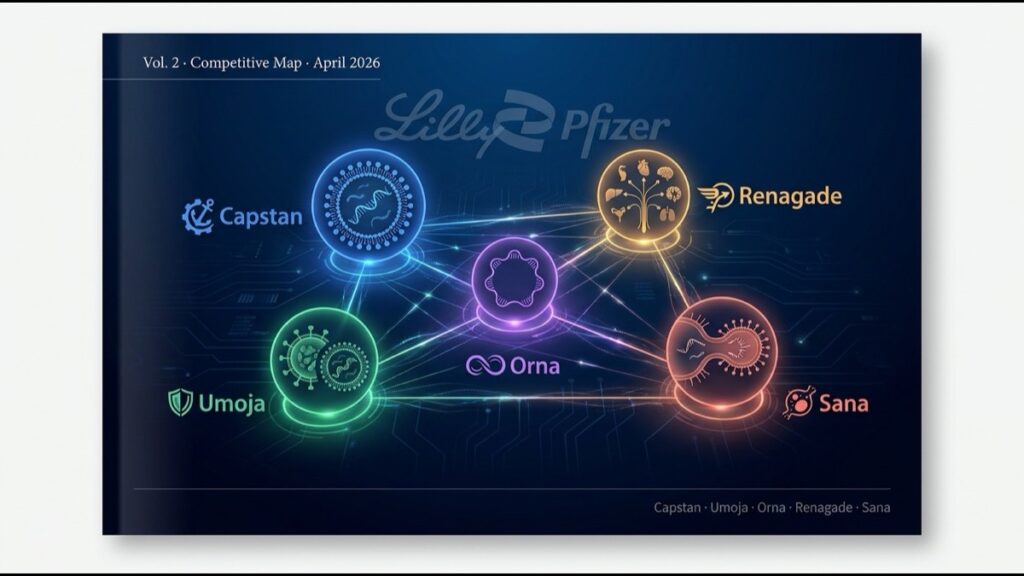
How Is In Vivo CAR-T’s Competitive Structure Shifting? AbbVie-Capstan, Lilly-(Orna+Kelonia), and the 3 Independents Mapping the Two-Camp Era | Vol.2
Comparing 5 in vivo CAR-T companies (Capstan, Umoja, Orna, Renagade, Sana) on technology platform (LNP-mRNA, LV, circular RNA, multi-organ LNP), indication focus (autoimmune vs cancer), strategic partners (Pfizer, Lilly, Merck). Vol. 2. -
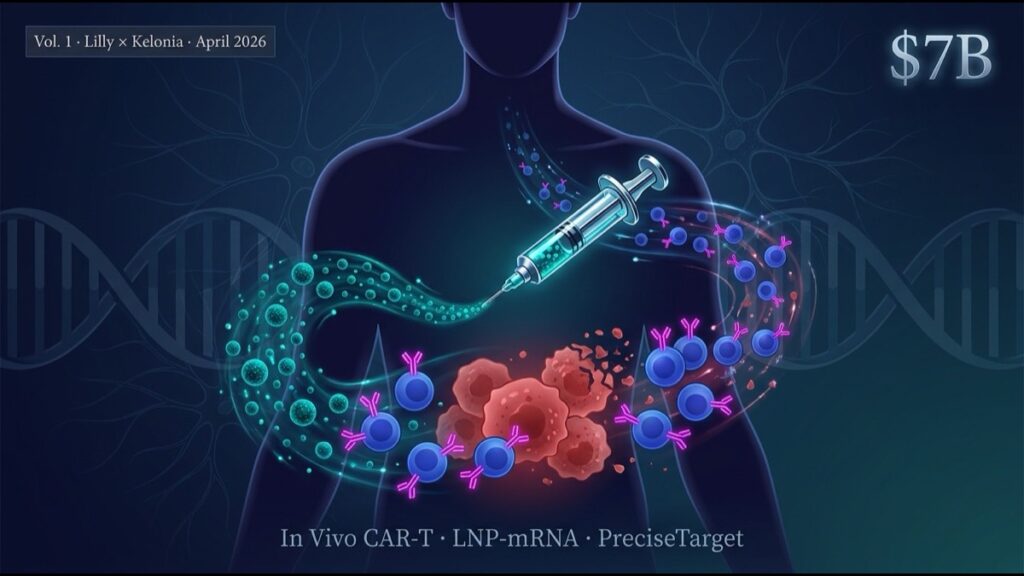
Where Is In Vivo CAR-T Heading? How Lilly’s Two-Step (Orna + Kelonia) Redefines Gene Therapy’s Core | In Vivo CAR-T Revolution Vol.1
April 21, 2026 Eli Lilly to acquire Kelonia Therapeutics for up to $7B—the largest in vivo CAR-T M&A signaling pharma majors' serious entry. Kelonia's PreciseTarget LNP delivers CAR mRNA to T cells in vivo, softening ex vivo CAR-T's three walls (manufacturing time, cost, toxicity) simultaneously. Vol. 1. -
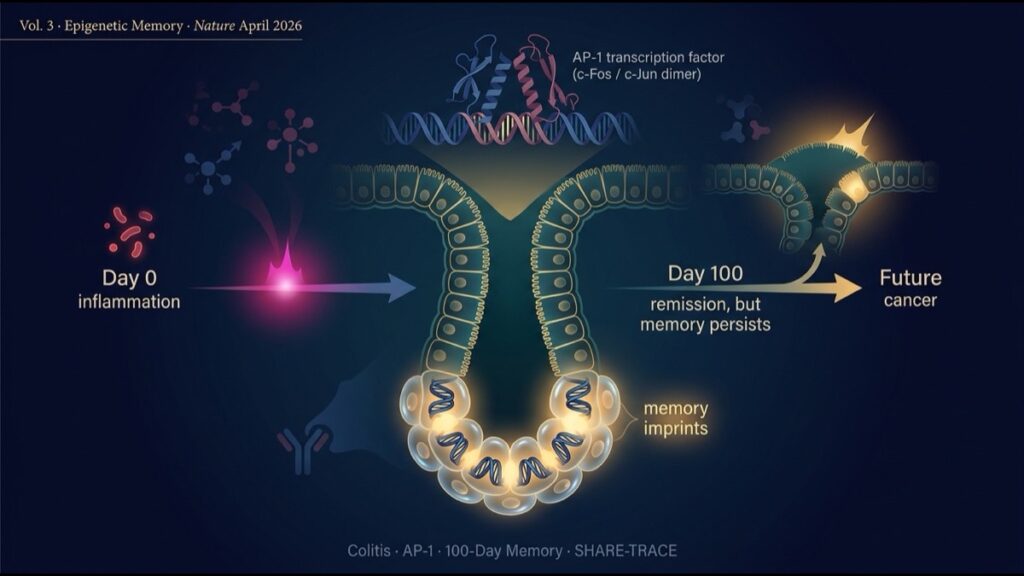
What the Epigenetic Memory of Colitis Reveals: AP-1 Imprints Persisting 100+ Days That Drive Cancer | Cancer Origin Vol.3 (Final)
Nagaraja et al. Nature 2026/4/16: chronic colitis leaves AP-1-dependent epigenetic memory in colonic stem cell chromatin that persists for 100+ days. SHARE-TRACE proves clonal inheritance through stem cell divisions. Memory + APC mutation cooperatively accelerates tumor formation; AP-1 inhibition eliminates acceleration. New IBD-cancer prevention paradigm. Final volume. -
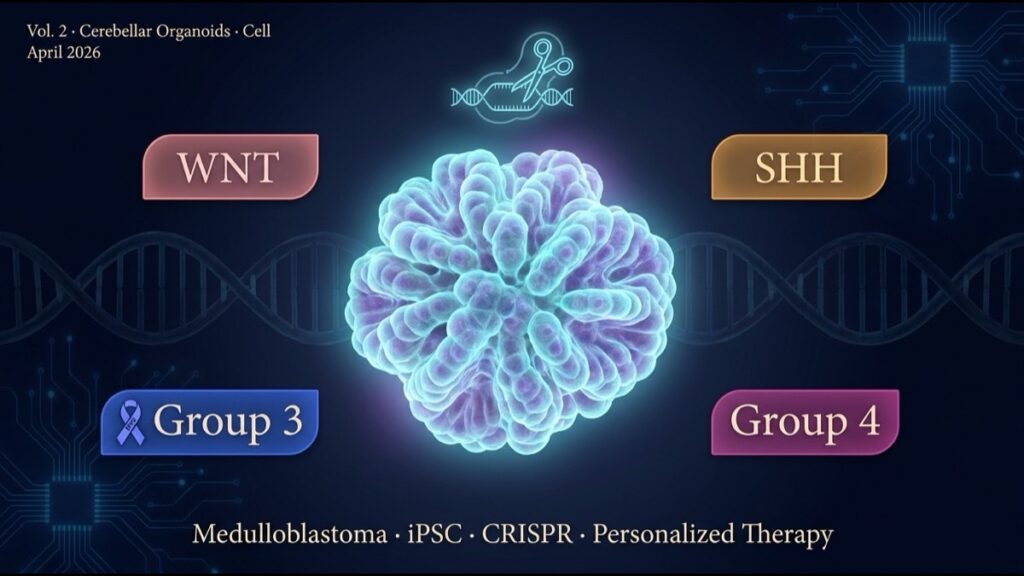
What Cerebellar Organoids Reveal About Medulloblastoma’s Origin: 3 Axes Toward Precision Medicine | Cancer Origin Vol.2
Cell April 2026 paper used human iPSC-derived cerebellar organoids + CRISPR to reproduce all four medulloblastoma subtypes (WNT, SHH, Group 3, Group 4) in real time. Cell of origin for each subtype directly confirmed. Vismodegib and BET inhibitor responses validated in subtype-specific manner. Personalized-therapy organoid proof of concept. Vol. 2. -
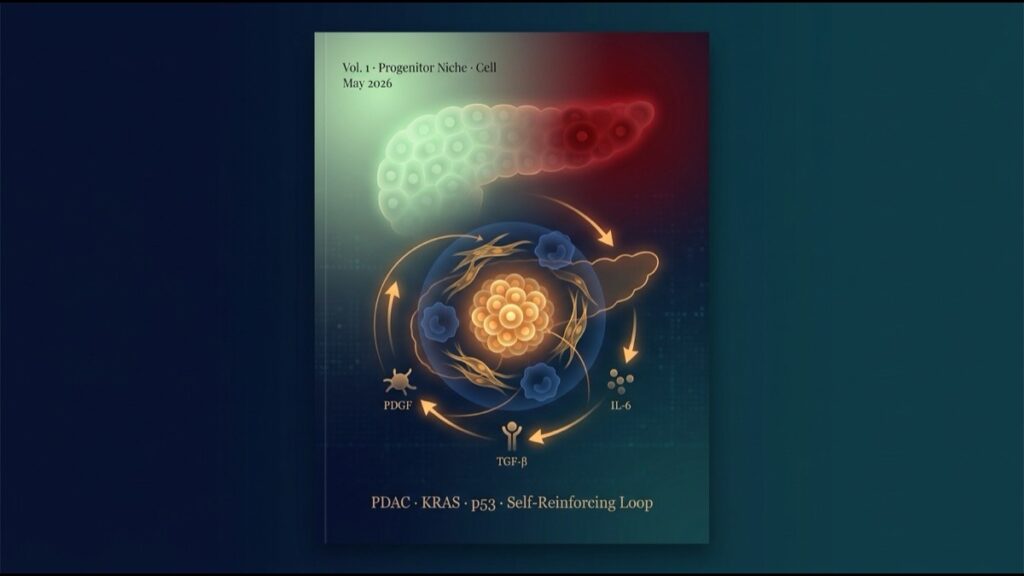
The Window Where Cancer Is Born — Progenitor Niche and the Benign-to-Malignant Transition | Frontiers of Cancer Origin Research, Vol. 1
Reyes et al. Cell May 2026: PDAC's benign-to-malignant transition happens in a rare progenitor-like cell population that assembles a self-reinforcing niche. Tumor-driving and tumor-suppressing programs (p53, CDKN2A, SMAD4) co-activate in these cells. KRAS inhibition or p53 activation collapses the niche and delays malignancy. Vol. 1. -
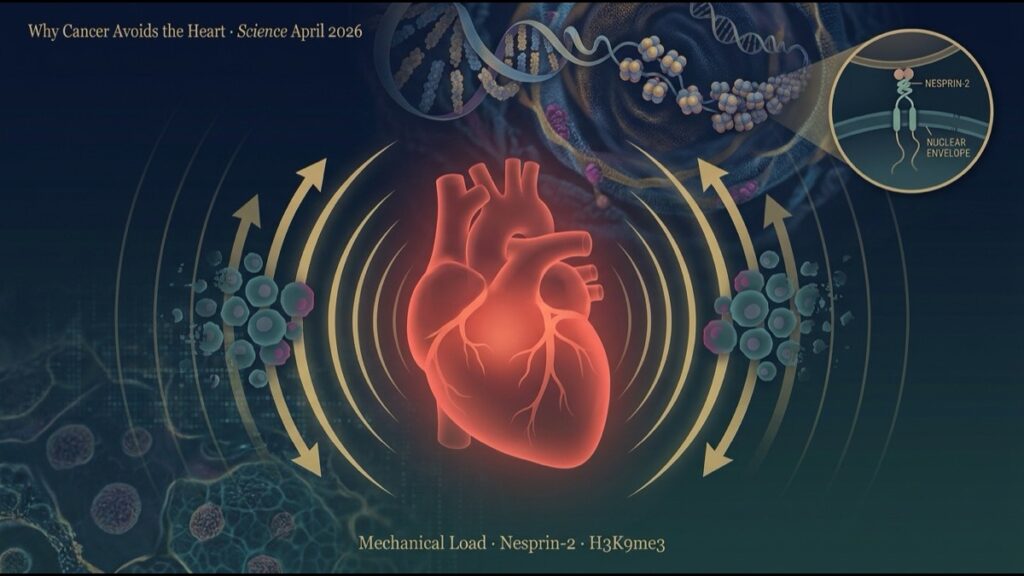
Why Does the Heart Rarely Get Cancer? — Mechanical Load Suppresses Tumour Growth via Nesprin-2 | Science April 2026
Science April 23, 2026 (Ciucci et al.) finally answered why the heart almost never develops cancer. Three experimental systems — genetic mouse model + heterotopic heart transplantation unloading + engineered heart tissues — established that mechanical load directly suppresses cancer cell proliferation. Mechanism: Nesprin-2 → histone methylation (H3K9me3) → chromatin compaction → reduced proliferation. Opens a new therapeutic axis: mechanical-stimulation therapy. -
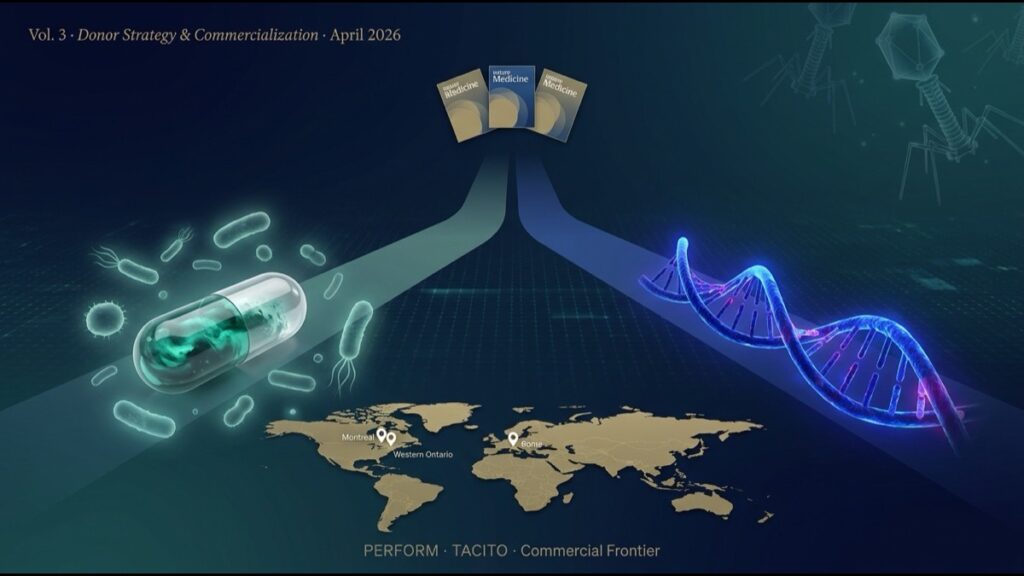
PERFORM vs TACITO, the Segatella copri Problem, and the Commercial Frontier — Three Crossroads Facing FMT’s Clinical Translation | Making Cancer Immunotherapy Work with FMT, Vol. 3 (Final)
Series finale. Same metastatic RCC, contrasting designs: PERFORM (healthy donor, ipi/nivo) vs TACITO (ICI complete-responder donor, pembro+axitinib). The cross-trial Segatella copri context-dependent toxicity discovery (drives toxicity ONLY under dual ICI), the three-layer commercial map (Seres/Vedanta/Exeliom; Locus/Eligo; rational consortia), and structural implications for the global ecosystem. The clinical-translation year of FMT/LBP, synthesized. -
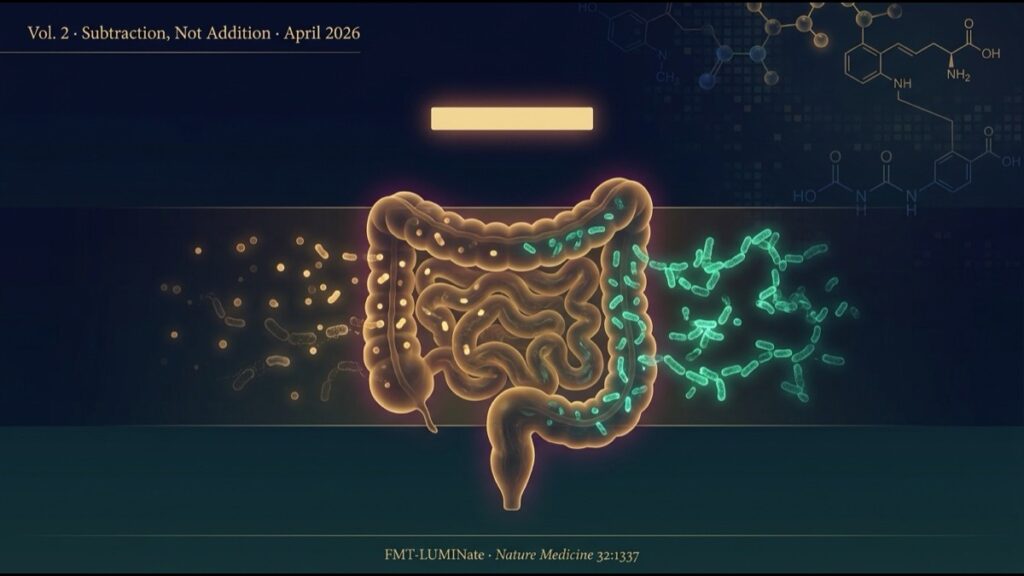
FMT Is Subtraction, Not Addition — How FMT-LUMINate Dissected the Real Mechanism Behind Microbiome-Empowered Cancer Immunotherapy | Making Cancer Immunotherapy Work with FMT, Vol. 2
Building on Volume 1, we dissect the convergent finding across the three April 2026 Nature Medicine trials: FMT works because patients lose their own deleterious bacteria, not because they acquire donor bacteria. FMT-LUMINate's mouse reverse-experiment proved causality. Mechanism: tryptophan/kynurenine pathway disturbance, IDO/AhR axis, regulatory T-cell expansion. Vol. 2 of the series. -
The Day Three Major FMT × Immunotherapy Trials Landed Together in Nature Medicine — Reshaping Cancer Immunotherapy with the Gut Microbiome | Making Cancer Immunotherapy Work with FMT, Vol. 1
In April 2026, Nature Medicine Vol. 32 No. 4 published three FMT-plus-immunotherapy trials in a single issue: 80% ORR in NSCLC, and a doubling of progression-free survival in metastatic RCC (24.0 vs 9.0 months, HR 0.50). But the deeper significance lies not in the numbers — it is the shared mechanistic finding that responders selectively lost their own deleterious bacteria, rather than acquiring beneficial bacteria from the donor. Volume 1 of our series surveys all three trials and what their simultaneous publication means.

12